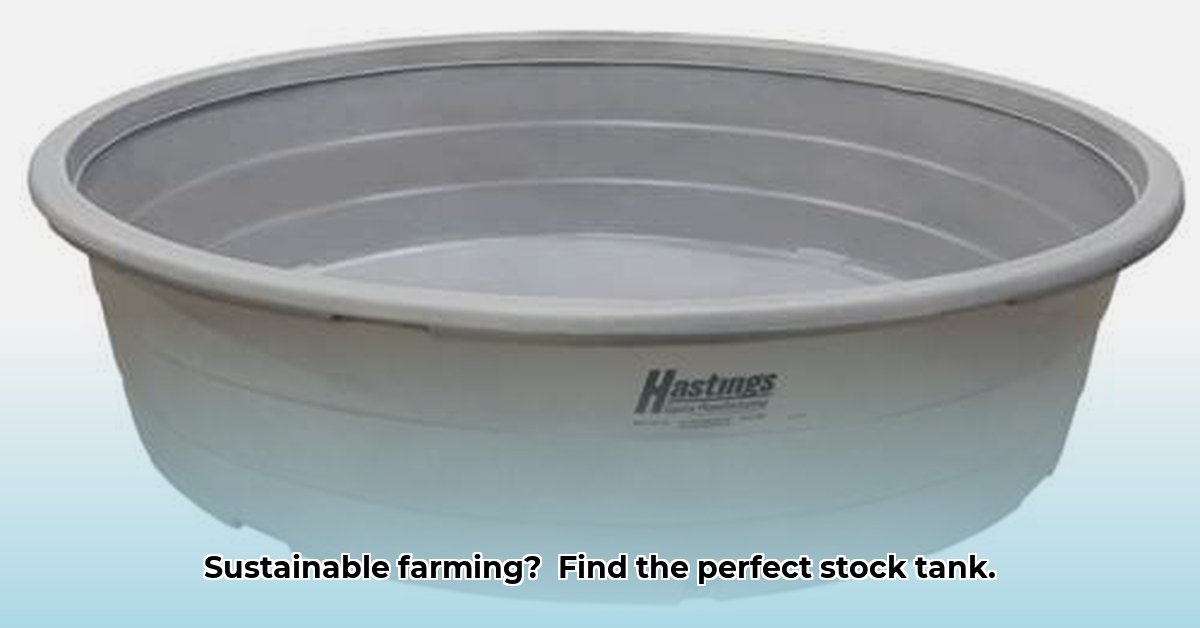
Understanding Your Water Storage Needs for Sustainable Agriculture
Efficient water storage is paramount for sustainable farming. Traditional methods often fall short, leading to water scarcity and inefficient resource management. This guide helps farmers select the most suitable large stock tank, optimizing water usage and contributing to long-term farm sustainability. We'll explore various tank types, factors influencing your choice, and best practices for installation and maintenance. For additional resources on farm structures, check out this helpful guide.
Types of Large Stock Tanks: A Detailed Comparison
Several tank types cater to diverse farming needs. Each offers unique advantages and disadvantages, impacting cost, lifespan, and environmental impact.
1. Galvanized Steel Tanks
- Construction and Materials: Made from steel sheets coated with zinc for corrosion resistance.
- Advantages: Relatively low initial cost, readily available, high water capacity.
- Disadvantages: Susceptible to rust and corrosion over time (reducing lifespan to 10-15 years), higher maintenance needs, significant environmental impact due to manufacturing and disposal, and potential for zinc leaching.
- Comparative Data: See table below.
2. High-Density Polyethylene (HDPE) Tanks
- Construction and Materials: Molded from durable, UV-resistant plastic.
- Advantages: Lightweight, easy to install and transport, resistant to rust and corrosion, longer lifespan (20-30 years), recyclable, and lower maintenance.
- Disadvantages: Higher initial cost compared to galvanized steel, potentially susceptible to puncture damage.
- Comparative Data: See table below.
3. Concrete Tanks
- Construction and Materials: Reinforced concrete structures.
- Advantages: Extremely durable and long-lasting (50+ years), resistant to almost all types of damage, high capacity.
- Disadvantages: High initial cost, heavy and difficult to install or relocate, requires specialized installation, and relatively high environmental impact during manufacturing.
- Comparative Data: See table below.
Comparative Data Table:
| Tank Type | Upfront Cost | Estimated Lifespan (Years) | Maintenance Needs | Environmental Impact | Recyclability | Typical Capacity (gallons) |
|---|---|---|---|---|---|---|
| Galvanized Steel | Low | 10-15 | High | Moderate to High | Low | High |
| HDPE | Medium | 20-30 | Low | Low to Moderate | High | Medium to High |
| Concrete | High | 50+ | Low | Moderate | Low | Very High |
Note: Specific costs and capacities will vary based on tank size and manufacturer.
Key Factors to Consider When Choosing a Stock Tank
Selecting the appropriate stock tank involves careful consideration of several critical factors:
Farm Size and Water Requirements: How much water do your farming operations require daily, weekly, or annually? Accurate assessment is crucial to avoid undersizing or overspending.
Climate Conditions: Extreme temperatures and harsh weather can impact tank longevity. HDPE tanks require UV protection in sunny climates, while steel tanks are vulnerable to corrosion in damp environments. Is rainwater harvesting a significant component of your water supply?
Water Source: Will you primarily rely on groundwater, rainwater harvesting, or a combination? This influences tank placement and potential water treatment needs.
Type of Crops Cultivated: Irrigation needs vary significantly depending on the crops. Water-intensive crops warrant larger storage capacity.
Budget and Long-Term Maintenance: While initial cost is a factor, consider the total cost of ownership, including installation, maintenance, and eventual replacement.
Access to Recycling Infrastructure: If sustainability is a priority, the recyclability of the tank becomes a key factor. HDPE tanks offer better recyclability than steel or concrete.
Ease of Installation & Access: A tank's location should guarantee easy access for cleaning, repair, and maintenance. A remote or inaccessible location may increase maintenance costs and risks.
Installation, Maintenance, and Safety
Proper installation is crucial for optimizing lifespan and preventing costly repairs. Always follow manufacturer instructions meticulously. Regular cleaning prevents algae growth and contamination. Inspect the tank regularly for leaks or signs of damage. Preventative maintenance minimizes costly repairs or replacements. Safety precautions, including secure placement and prevention of unauthorized access, are essential.
Integrating Smart Water Management Technologies
Integrating smart technologies enhances efficiency and sustainability. Level sensors provide real-time water level monitoring, promoting better management. Automated irrigation systems optimize water distribution, reducing waste. These technologies, while entailing additional investment, offer long-term cost savings and improved resource management. Consider the long-term cost-benefit analysis before integrating these technologies.
Conclusion: Making an Informed Decision for Sustainable Farming
Choosing the right large stock tank is a significant investment in sustainable farming practices. By carefully considering the factors outlined in this guide, farmers can optimize water management, improve operational efficiency, and contribute to environmental responsibility. Select a tank best aligned with your specific needs, budget, and long-term farming goals for optimal sustainability.
Resources
- [Link to relevant agricultural extension service or university publication] (Example: Research on tank material longevity from a reputable agricultural university)
- [Link to a reputable manufacturer of stock tanks] (Example: A manufacturer’s page on HDPE tank specifications)
- [Link to a guide on rainwater harvesting] (Example: A government agency’s guide to implementing rainwater harvesting systems)